
A FATHER’S PROMISE
Ashborne:AFP
ASHBORNE: A FATHER’S PROMISE
Ash: The promise remains.
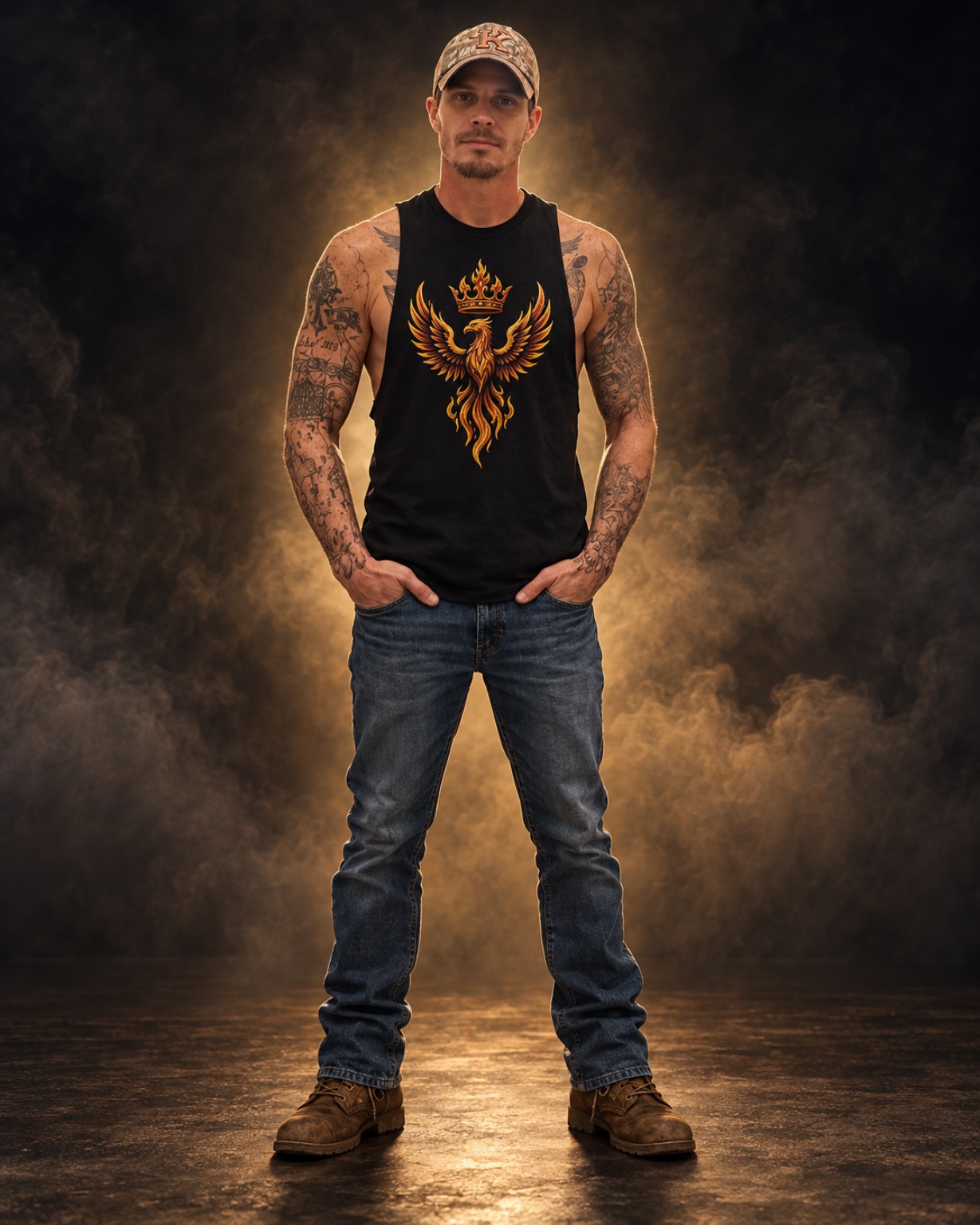
I’m Zach.
Ashborne is the name attached to the music, but there really isn’t a character standing between me and the person listening.
What you hear in these songs comes from my life.
I’m from Western Kentucky. Before any of this became serious, I was an ironworker, a husband, a father, and a guy who had been writing things down for most of his adult life without really knowing what they were going to become.
I started writing lyrics when I was 17.
When I was 18, a friend built music around a song I had written called “Full Throttle.” We performed it at my high school talent show. I had always wanted to perform. I wanted the stage, the music, all of it. What I didn’t have was confidence that I had the vocal talent necessary to actually be successful at it.
So I leaned into the part I knew I could do.
I wrote.
Writing became the way I stayed connected to music even when I didn’t believe I belonged behind a microphone. Lyrics, poems, fragments, angry thoughts, questions, memories. Sometimes I wrote because something mattered to me. Sometimes I wrote because I was pissed off. Sometimes writing was simply the only place I had to put what was happening in my head.
For a long time, I accepted the idea that if I ever had a place in music, it would be behind the words rather than behind the voice.
That became especially true during the hardest years of my life.
My son Rob died in 2015.
What happened afterward changed my family permanently and eventually led to years of incarceration while I continued fighting the circumstances surrounding his case. During that time, I wrote constantly. Some of it was music. Some of it was poetry. Some of it probably wasn’t anything except a man trying to make sense of grief, anger, helplessness, fatherhood, and a life that had gone completely sideways.
Years later, I found some of those writings again.
One of them became “Demons In The Night.”
With help turning what I had written into a structured lyric sheet, I put it into Suno and heard my words become an actual song for the first time.
That changed everything.
Not because a machine suddenly made me a musician.
Because for the first time, I had access to the part of music I had always felt was out of reach.
I could write the story. I could shape the structure. I could decide how the words needed to hit, where the guitars needed to breathe, where the drums needed to explode, where a vocal needed to pull back instead of scream, and what the entire thing was supposed to feel like.
Then I could actually hear it.
That first song turned into another, then another, and eventually into Ashborne: A Father’s Promise.
The name is intentional.
Ashborne represents what came after everything I had been through.
A Father’s Promise represents Rob.
That promise is bigger than one album, one song, or one version of his story. It is my commitment to keep telling his story, my story, and what our family lived through. It is a promise to keep his name alive and to make something meaningful from a part of my life that could have easily consumed everything that came after it.
That is why so much of my music deals with fatherhood, grief, anger, injustice, survival, loyalty, family, and the things people carry long after everyone else has moved on.
But Ashborne isn’t limited to one subject.
Sometimes the music is personal.
Sometimes it is aggressive.
Sometimes it is sarcastic as hell.
Sometimes I write something because it makes me laugh and I want to see just how ridiculous I can make it.
That’s part of me too.
Musically, Ashborne lives somewhere between nu-metal, metalcore, dark East Coast rap, cinematic music, and lead-guitar-driven heavy rock. I like deliberate rap cadences, big melodic choruses, heavy low-end, downtuned guitars, breakdowns that actually have room to hit, and lead guitar that can carry emotion without needing somebody to explain what the song is supposed to feel like.
I don’t want every song to sound the same.
I want them to sound like they came from the same person.
I also don’t hide how I make them.
I use AI tools as part of my creative process.
ChatGPT helps me test ideas, organize thoughts, research, work through structure, and figure out why something I’ve been staring at for three hours still isn’t working.
Suno is the production environment I use to turn those ideas into music.
Neither one gets the final word.
I do.
I rewrite constantly. I change lyrics, cadence, structure, instrumentation, arrangements, vocal direction, breakdown placement, guitar parts, and sometimes the entire concept until what comes back actually represents what I meant to create.
I’ve generated thousands of versions of songs doing exactly that.
If somebody wants to dislike AI music simply because AI was involved, that’s their choice.
I would rather tell people exactly what I do than build anything around pretending otherwise.
That same belief in transparency helped shape The Ashen Choir.
The idea originally started under another name, but the real thing took shape when my brother V and I started talking seriously about what we wanted to build together.
Not another music group built around status.
Not another place where artists become numbers in a submission queue.
We wanted something human.
The Ashen Choir exists because we believe there are independent artists sitting somewhere right now with incredible music and almost nobody listening.
Some of them don’t need another person telling them how many followers they have.
They need somebody to actually hit play.
They need somebody to listen to the second verse.
They need another artist to hear them and say, “We should make something together.”
They need somebody to remember their name.
That is what I want our livestreams, interviews, events, collaborations, and everything we build around The Ashen Choir to become.
A place where music leads to people.
Where one artist brings another artist.
Where somebody gets heard because another person believed they deserved the room.
V and I came into music from different directions, with different personalities and different creative instincts, but the vision is the same.
Build something real.
Make the music we want to make.
Help other artists get heard.
And don’t become the kind of people we couldn’t stand working with on the way here.
I’m still figuring out what Ashborne becomes from here.
That’s part of what makes this interesting.
I didn’t grow up with a realistic plan for becoming an artist. I wanted it, but for a long time I didn’t believe I had what it took to make it happen.
So I wrote instead.
Years later, technology gave me a way to take those words, those experiences, and everything I had spent years carrying and finally turn them into the music I had always wanted to make.
Now I’m not standing behind the writing anymore.
My name is Zach.
The music is Ashborne: A Father’s Promise.
And the promise remains.